
Civil unrest can erupt without warning, turning an ordinary day into chaos.
One moment you’re running errands and planning your weekend.
The next, sirens wail, crowds surge, and the city around you begins to unravel.
Crowds shift fast, the rules you rely on no longer apply, and staying calm gets harder as tensions rise.
The key to survival isn’t fear—it’s preparation.
By spotting early warning signs, keeping essential supplies ready, and knowing how to move safely, you give yourself options when things spiral out of control.
Simple steps—like planning safe routes, carrying the right gear, and knowing how to deal with authorities—can be the difference between getting stuck in the middle and making it home safely.
This guide shows you what civil unrest looks like, how to recognize it early, and the practical steps that keep you in control when the streets aren’t.
How to Survive Civil Unrest
What Is Civil Unrest and Civil Disorder
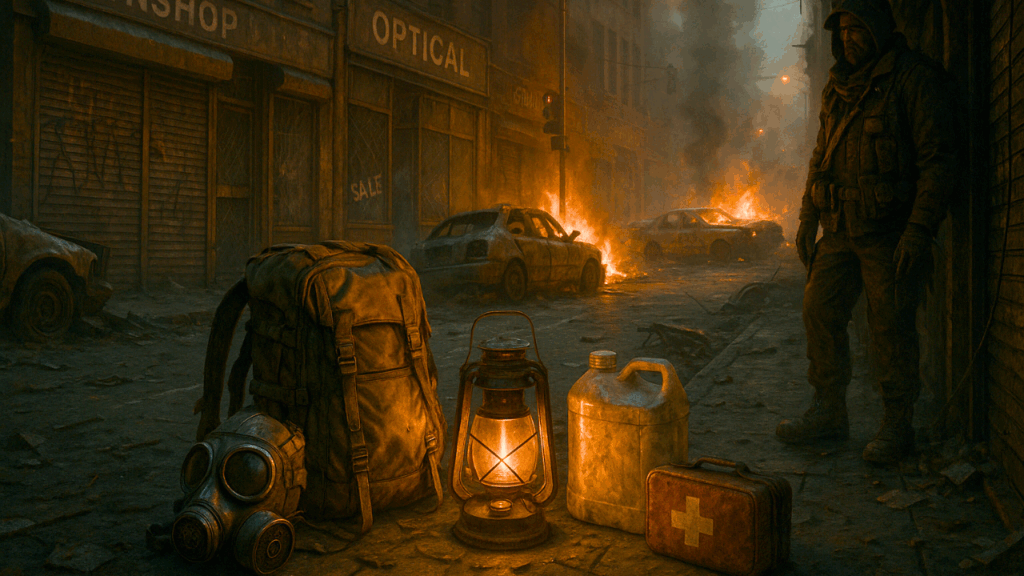
Civil unrest is a broad term that covers protests, strikes, marches, or riots where people openly challenge authority or policies.
It often begins as a public disturbance—like a demonstration in a city square—that may stay peaceful or quickly escalate into conflict.
Civil disorder is when unrest crosses the line into disruption.
Roads may be blocked, businesses vandalized, and clashes with law enforcement can break out.
Not every protest ends in violence, but the shift from peaceful gathering to disorder can happen fast.
History shows how quickly things can change.
In France, the Yellow Vest protests started as demonstrations over fuel taxes but spiraled into nationwide unrest with road blockades and violent confrontations.
In the U.S., peaceful marches after high-profile incidents have at times turned into riots that shut down entire neighborhoods.
When unrest escalates, the signs are usually clear: police presence intensifies, businesses shutter early, and public transportation grinds to a halt.
Recognizing these shifts early is critical—it gives you time to change course and avoid being trapped in the wrong place at the wrong time.
Common Causes of Public Disturbance
Civil unrest rarely happens at random. It’s usually fueled by specific pressures that affect large groups of people.
Political disputes, such as contested elections or government corruption, are among the most common triggers.
Economic struggles like mass layoffs, rising prices, or widening inequality can also push frustrated communities into the streets.
Social and cultural issues play a major role as well.
Protests have erupted worldwide over racial injustice, police actions, and restrictions on civil rights.
Even environmental disputes, such as land use conflicts or pollution crises, have sparked demonstrations that grew into larger unrest.
Often, tensions simmer for months or even years before a single event sets everything in motion.
A controversial court ruling, a sudden policy shift, or even an isolated incident of police violence can transform frustration into action almost overnight.
By understanding these patterns, you can better recognize when tensions in your area are building toward potential unrest.
Types of Demonstrations and Protests

It’s critical to understand that not all demonstrations look the same.
Some are organized marches with clear leaders and planned routes, while others are spontaneous gatherings.
Peaceful protests might involve speeches, signs, or sit-ins where participants avoid violence.
Other events can be more disruptive.
Strikes may shut down workplaces or public services. Road blockades and building occupations interfere with normal activity and create tension with authorities.
At the extreme end are riots, where property damage, fires, and clashes with police occur.
These are the most dangerous situations for bystanders.
Understanding the differences between types of protests helps you decide when it’s safe to observe from a distance and when you should leave the area entirely.
Recognizing Warning Signs of Escalation
Civil unrest rarely happens without warning.
You can often see tension building before it turns into violence.
Watch for sudden changes in the mood of a crowd, like raised voices, aggressive body language, or people throwing objects.
Pay attention to how police or security forces respond.
A heavier presence, riot gear, or roadblocks usually means the risk of conflict is rising.
Even small protests can grow quickly, so don’t ignore early signs.
Other clues include businesses closing early, public transport shutting down, or groups gathering in unusual places.
These signals often mean the area is becoming unsafe.
Trust your instincts. If something feels off, it probably is.
Staying Informed and Monitoring News
Unfortunately, you can’t rely on instincts alone.
Staying updated through multiple sources helps you see the bigger picture.
Follow local news outlets, official government alerts, and verified emergency channels.
Social media can also give fast updates, but confirm details before acting on them.
Set up alerts on your phone for breaking news in your area.
A few minutes of preparation can save you from walking into a dangerous situation.
It also helps to share information with neighbors, friends, or coworkers.
A small network of people watching out for each other makes it easier to spot risks early.
Having reliable information is invaluable at times like these.
It gives you time to adjust your plans before unrest spreads.
Identifying Safe Zones and Escape Routes
Knowing where to go if unrest starts is just as important as spotting it.
Look for safe zones like public buildings, libraries, or community centers that stay open during emergencies.
Avoid areas near government offices, police stations, or protest hotspots since they are more likely to draw crowds.
Smart preppers always plan at least two escape routes.
Streets can close suddenly, so map out alternate paths by foot and by car.
Keep your gas tank at least half full and carry a small bag with essentials like water, ID, and a phone charger.
If you go inside buildings, identify multiple exits and avoid getting trapped in enclosed spaces.
Quick decisions are easier when you already know the safest way out.
Blending In and Avoiding Attention
When you’re caught in a crowd, the best move is to avoid standing out.
Loud clothing, flashy jewelry, or obvious recording devices can draw unwanted attention.
Neutral colors and simple outfits help you blend in and move without being noticed.
If people around you are chanting or moving in one direction, don’t resist the flow.
Work your way toward the edges while appearing calm. This allows you to move and get out of the situation easier.
Acting nervous or panicked can make you stand out, so keep your body language steady.
Avoid arguing with strangers or showing strong reactions.
Even small confrontations can escalate quickly in a riot.
Staying quiet and blending in gives you more time to find a safe exit.
Self-Defense Basics During Riots
Your first line of defense is awareness.
Keep your head up, scan your surroundings, and spot escape routes before you need them.
If you choose to carry self-defense tools, like pepper spray, a tactical pen, or even a legal concealed carry firearm, make sure you know how to use them properly.
Carrying a weapon without training can put you at greater risk.
When it comes to taking action, you should focus on defense, not offense and use tools to create space and escape, not to fight.
For example:
- Pepper spray: Works best at close range, but wind can affect it.
- Tactical pen or flashlight: Useful for breaking glass or fending off grabs.
- Concealed carry: Only an option if you’re trained, licensed, and last-resort escape isn’t possible.
When to Engage or Evacuate
Deciding whether to defend yourself or leave depends on the situation.
However, in most cases, you are best served by leaving.
Staying to defend yourself should be seen as a last resort because you never know what will happen next.
The crowd could join in to support you, or worse, to confront you.
If you see an exit, take it early. Don’t wait for the crowd to grow violent before moving.
The longer you stay, the harder it becomes to leave safely.
If you’re trapped and someone directly threatens you, that’s when self-defense comes into play.
Use the least force needed to break free and get out.
Staying to fight only increases your chances of injury.
Even if you’re confident in your skills, a riot is unpredictable.
Your best chance of survival is reaching safety as quickly as possible.
Building an Everyday Carry Kit

Your everyday carry (EDC) should focus on items you can keep close without drawing attention.
Stick to compact, practical tools that cover communication, navigation, and self-protection.
At a minimum, carry:
- Phone with hands-free option
- Flashlight (small but bright)
- Folding or fixed-blade knife
- Multi-tool
- Compact first aid kit
- Emergency cash
Avoid bulky or flashy gear that makes you stand out.
A neutral backpack or messenger bag works better than tactical-looking packs.
Keep your setup light enough to move quickly but complete enough to cover your needs for a few hours on the move.
Choosing Emergency Food and Water
When shelves empty fast, you’ll be glad you stocked up.
Focus on food that is lightweight, calorie-dense, and won’t spoil if stored for months.
Emergency ration bars, trail mix, or vacuum-sealed jerky are good choices.
They take up little space and give you steady energy.
For water, a stainless steel bottle is smart because it doubles as a container for boiling if needed.
Pack water purification tablets or a small filter so you can make questionable sources safe to drink.
Keep at least one full day’s worth of water and food in your bag.
Rotate supplies every few months so they stay fresh.
Don’t forget any medications you rely on. Missing even a single dose can be risky in a chaotic situation.
Essential Items for Mobility and Safety
Civil unrest often means blocked roads, broken glass, or sudden confrontations.
You’ll want gear that helps you move and stay protected.
Useful items include:
- Comfortable shoes for walking long distances
- Light jacket or hat to change your appearance quickly
- Protective mask or goggles for smoke or debris
- Earplugs to reduce loud noise
- Small pry bar or window breaker for escape routes
Keep your bag organized so you can grab what you need fast.
Every item should serve a clear purpose. If it doesn’t help you move, stay safe, or stay hidden, leave it behind.
Interacting Safely With Law Enforcement
During unrest, you may see more police patrols, checkpoints, or officers in riot gear.
If you’re approached, keep your hands visible and avoid sudden movements.
Speak clearly, stay polite, and don’t argue even if you disagree with their actions.
Know your basic rights.
You don’t have to answer every question beyond giving your name and ID if asked, but refusing calmly is better than raising your voice.
If you want to record an interaction, do so openly and without interfering.
It helps to carry only what you need.
Avoid items that could be mistaken for weapons or tools for vandalism.
If stopped, follow instructions step by step.
Writing down or saving badge numbers and times of contact can also protect you later if issues arise.
Quick tips:
- Keep calm and avoid confrontations
- Show ID when required
- Record details of encounters
- Don’t resist or escalate situations
Understanding Curfews and Restrictions
Authorities sometimes announce curfews or restrict access to certain streets or neighborhoods.
Breaking these rules can lead to fines, arrest, or being detained, even if you weren’t involved in protests.
Always check local news, city alerts, or police updates to know the exact times and areas affected.
Plan your movements around these restrictions.
If you must be out, carry proof of work schedules, medical needs, or other valid reasons.
This can help explain why you’re outside if law enforcement stops you.
Curfews usually come with increased police patrols and checkpoints.
Expect to be questioned more often, so keep your answers short and respectful.
Avoid testing boundaries or trying to “push through” restricted areas, as officers are trained to enforce these rules strictly.
Escape Tips for Crowded Areas

Crowds can turn dangerous quickly when panic spreads or violence breaks out.
Your first goal is to move toward the edges instead of pushing through the center.
Staying near walls or barriers can give you more stability and a clearer path out.
Keep your hands free if possible.
Carrying too much makes it harder to move or protect yourself.
If you must hold something, use a small backpack that keeps your arms open.
Watch the flow of the crowd.
Move with it at an angle toward an exit instead of fighting against it.
- Related: How to plan for emergency evacuation
If you fall, protect your head and try to roll toward the side until you can stand.
Avoid drawing attention by shouting or pushing unless you need immediate help.
Blending in and keeping a low profile makes it easier to slip away without becoming a target.
Evacuation Planning for Home and Work
If unrest is near your home or job, you should already have a plan to leave quickly.
Identify at least two exit routes for each place since main roads may be blocked.
Keep a paper map handy in case phone service goes down.
Pack a small go-bag with water, snacks, ID, cash, and basic first aid.
Store it where you can grab it in seconds. At work, know the closest exits and safe meeting spots outside the building.
Set up a communication plan with family or coworkers.
Pick a contact outside your city who can relay messages if local networks fail. Write down important numbers in case your phone dies.
If you must shelter in place before leaving, lock doors, close blinds, and stay away from windows until it’s safe to move.
Staying Safe While Driving During Unrest
Driving can be risky if roads are blocked or mobs are nearby.
Always keep your gas tank at least half full so you don’t get stranded.
Before heading out, check traffic apps or radio updates for closures and danger zones.
Stick to side streets when possible.
Major roads, bridges, and tunnels are common choke points that can trap you.
Keep windows rolled up and doors locked at all times.
If you approach a crowd, do not drive into it.
Turn around or take another route. If you can’t, park safely away and continue on foot.
Carry emergency supplies in your car such as bottled water, a flashlight, and a first aid kit.
A paper map and portable charger can help if your phone loses service.
Wrapping Up
Civil unrest can unfold faster than you expect, turning familiar streets into dangerous territory.
While you can’t stop it from happening, you can control how you respond. Awareness, preparation, and calm decision-making are what keep you safe.
The key to how to survive civil unrest is not fear, but readiness.
By recognizing warning signs, planning escape routes, carrying the right gear, and knowing how to handle both crowds and authorities, you give yourself the best chance to avoid danger.
You don’t need to live on edge, but you do need to think ahead.
Even small steps, like keeping essentials ready, monitoring local news, and practicing situational awareness, can make a huge difference when things turn chaotic.